Best Destination Wedding Locations in India for 2026 | Complete Guide
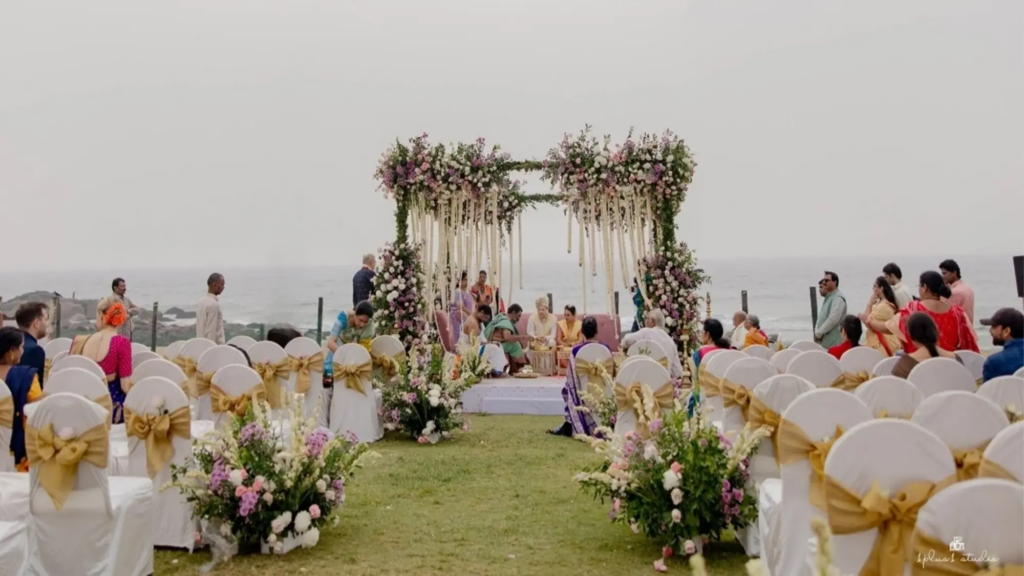
I have spent years looking at wedding destinations across India, and one thing has become very clear to me: nowhere else gives Indian couples the kind of variety, beauty, and cultural depth that we have right here at home. In one part of the country, you can celebrate in a marble palace floating on a lake. In another, you can host your wedding against the backdrop of a desert fort, on a beach by the sea, in the hills, or beside calm backwaters. That range is what makes India so special for destination weddings.
What matters, though, is choosing the right destination for the kind of wedding you actually want. The location is not just about pretty photographs. It affects your guest experience, your logistics, your budget, and even the overall mood of the celebration. A wedding in Udaipur feels completely different from one in Goa, and that difference matters.
This guide brings together the strongest destination wedding locations in India for 2026 — written in a more natural, reader-friendly voice, while keeping the practical details couples genuinely need.
| Destination | Best For | Guest Count | Best Season |
| Udaipur | Royal lakefront weddings | 50–400 | Oct–Feb |
| Jaipur | Large heritage celebrations | 150–1000 | Nov–Feb |
| Goa | Coastal luxury & relaxed energy | 80–500 | Nov–Feb |
| Jodhpur | Dramatic fort & palace settings | 50–350 | Oct–Feb |
| Hill Stations | Intimate, nature-led weddings | 30–150 | Mar–Jun, Oct–Nov |
| Kerala | Soulful, culture-rich celebrations | 50–300 | Sep–Mar |
Udaipur
If there is one city that almost always comes up first in destination wedding conversations, it is Udaipur. And honestly, that makes complete sense. The city has a kind of romance that is very difficult to recreate anywhere else. Between the lake views, old palaces, sandstone courtyards, and glowing evening lights, everything feels naturally cinematic.
What makes Udaipur especially beautiful for weddings is how effortlessly each function fits into the city. A welcome dinner by the lake, a mehndi in a heritage courtyard, or a sangeet overlooking Lake Pichola — all feel like they belong there. Guests are not just showing up for events. They feel like they are part of a larger experience.
The properties I keep coming back to in Udaipur are these:
Oberoi Udaivilas
is where most serious luxury wedding conversations start, and for good reason. Set on 30 acres of landscaped gardens on the banks of Lake Pichola — on what were once the hunting grounds of the Maharanas of Mewar — its interconnecting domes, reflection pools, and bougainvillea-draped courtyards create a setting that feels genuinely royal without trying too hard. The butler service and the level of personalisation here are benchmarks that other properties in the city get measured against.
Taj Lake Palace
sits on a four-acre island in the middle of Lake Pichola, accessible only by boat. Built in 1743 by Maharana Jagat Singh II as a royal summer retreat, it is one of those properties that needs no introduction anywhere in the world. With 65 rooms and 18 suites, it works best for intimate weddings
— the limited inventory is precisely what makes it feel so exclusive. There is arguably no more romantic arrival experience in Indian hospitality than stepping off a boat onto the Taj Lake Palace jetty as your guests watch from shore.
Raffles Udaipur
is set on a private island on Udai Sagar Lake and is the newest ultra-luxury addition to the Udaipur wedding circuit. The design is more contemporary — European-influenced, clean, and quietly grand. Its island setting gives it a natural seclusion that even Oberoi cannot match, and its availability is noticeably better than legacy properties. For couples who want modern luxury with a strong visual identity, Raffles is increasingly the first call.
Taj Fateh Prakash Palace
sits on the eastern banks of Lake Pichola as part of the City Palace complex — built at the turn of the 20th century by Maharana Fateh Singh to receive royal guests. It is more understated than its Taj sibling on the lake. Fewer rooms, more intimate, and the kind of heritage that comes from being a living part of Mewar’s actual royal complex. The Durbar Hall with its crystal chandelier is one of the most extraordinary event spaces in the city.
The Leela Palace Udaipur
suits couples who need scale. It handles larger guest lists more comfortably than most Udaipur properties, and the lakefront setting still delivers on the visual promise of the city — without the logistical complexity of an island venue.
The best time for Udaipur is October to February, with November to January being especially popular. Room inventory is a practical consideration — if your guest list is large, you will often need overflow accommodation at nearby properties.
Jaipur
Jaipur works brilliantly for couples who want a heritage wedding but cannot compromise on scale. This is one of the few cities in India where large families and big guest lists are still manageable without losing that grand destination feel. It has the palaces, the culture, the accessibility, and the hospitality ecosystem to handle weddings at a very serious scale.
What I really appreciate about Jaipur is that it gives guests more than just the wedding venue. Between events, they can explore the old city, shop in the bazaars, visit forts, and enjoy the energy of the city itself. That gives the wedding a fuller atmosphere instead of making everything feel confined to one hotel.
The properties that stand out:
Rambagh Palace
is the classic royal wedding address in Jaipur — built in 1835, once the principal residence of Maharaja Sawai Man Singh II and Maharani Gayatri Devi, and now managed by Taj. Spread across 47 acres of Mughal gardens with 78 rooms and suites, it handles both grand receptions and intimate functions across multiple event spaces including the iconic Mughal Garden and the Darbar Hall. For couples who want genuine heritage with the backing of Taj’s service standards, Rambagh is the undisputed reference point.
Samode Palace
is for a completely different kind of couple — one that wants privacy, exclusivity, and the feeling of stepping back in time. Located 45 kilometres from the city in the village of Samode, this 475-year-old palace with its gold-leaf ceilings, frescoed courtyards, and antique mirror work is not built for large productions. With 43 rooms, most couples who choose Samode take over the entire property. What you get in return is a wedding that feels entirely yours — no other guests, no competing events, just your family and the palace.
Fairmont Jaipur
is the most practical choice for large Indian weddings that need both scale and elegance. With 245 rooms and over 90,000 square feet of indoor and outdoor event space — the Mughal Courtyard, Charbagh Garden, and Fairmont Lawn among them — it handles big guest counts without losing its sense of occasion. The Mughal and Rajputana architectural blend gives it a cinematic quality, and the events team is among the most experienced in the city.
The Leela Palace Jaipur
brings newer infrastructure to a heritage-inspired setting. With 200 rooms, a pillarless Grand Ballroom, and the Sundarban Lawn seating up to 1,500 guests, it is one of the most operationally capable wedding venues in Rajasthan. For couples who want the palace aesthetic with the smooth execution of a newer property, The Leela is the strongest answer.
Alila Fort Bishangarh
deserves a mention for couples who want something completely different from the larger hotel format. Perched atop a 230-year-old fort in the Aravalli Hills, it is boutique, dramatic, and genuinely unlike anything else near Jaipur. For weddings under 150 guests where the setting is the entire point, there is nothing quite like arriving at a hilltop fort for your own wedding.
The ideal time for Jaipur is November to February. If your wedding is likely to fall in peak season, it is worth starting conversations early — the best dates at any of these properties disappear fast.
Goa
Goa remains one of the most popular destination wedding choices in India, and I think a big reason for that is how comfortable and relaxed it feels from the moment guests land. Unlike a palace wedding, which often feels formal from start to finish, Goa gives people permission to let go a little. That shift in mood changes the entire celebration.
A wedding in Goa often feels less like a formal social obligation and more like a shared holiday with everyone you care about. Guests are by the beach, the pace is slower, the clothes are lighter, and the events naturally feel more social. For couples who want their wedding to feel warm, easy, and joy-filled, Goa is hard to beat.
The properties that genuinely stand out:
Taj Exotica Resort & Spa
is one of the most established choices for luxury beach weddings in Goa — 56 acres of beachfront in Benaulim, South Goa, with 140 rooms, the pillarless Sala Grande ballroom, and the Grand Lawn looking straight out at the Arabian Sea. Decades of experience with Indian weddings show in how smoothly the team operates.
The St. Regis Goa
sits on 49 acres of landscaped gardens alongside Mobor Beach and the Sal River in South Goa. The Great Lawn seats 450 guests, the Astor Ballroom holds 350 indoors, and there is a dedicated beachside venue for cocktail functions. For couples who want understated ultra-luxury, this is the strongest option in South Goa right now.
The Leela Goa
is the best choice for couples who need variety across multiple wedding functions. With 206 rooms and 75 acres spanning the Sal River estuary and the Arabian Sea, it offers genuinely distinct event spaces — the Butterfly Garden, Coconut Grove, Royal Lawn, and private beachfront each create a completely different atmosphere. For a three-day Indian wedding where no two events should look alike, The Leela’s spread is unmatched in Goa.
W Goa
is for a specific kind of couple — younger, high-energy, more excited about the sangeet and the after-party than the formal ceremony. The design is sharp, the spaces have an energy that older Goa properties do not, and it pulls off late-night celebrations better than almost any other venue in the state.
Alila Diwa Goa
is the choice for intimate weddings where the mood is organic and understated. The Indo-Portuguese architecture, the quieter South Goa setting, and the smaller scale make it ideal for couples who want something personal rather than grand.
The strongest season for Goa is November to February. Monsoon months are generally not suitable for destination weddings, so timing matters a great deal here.
Jodhpur
Jodhpur has a visual identity that is entirely its own. The blue city, the dramatic rise of Mehrangarh Fort, the grandeur of Umaid Bhawan, and the raw desert character all combine to create a wedding atmosphere that feels bold and striking. If Udaipur feels romantic and Jaipur feels grand, Jodhpur feels dramatic.
This city works especially well for more exclusive celebrations where a family wants to take over a property and create a fully immersive wedding experience. It has a way of making every event feel private, cinematic, and intensely memorable.
Umaid Bhawan Palace
is one of India’s most extraordinary wedding venues — still partly the official residence of the Jodhpur royal family, with the Taj-managed wing offering event spaces that are unmatched in scale, history, and architecture. For couples who want grandeur at its most absolute, Umaid Bhawan is in a category of its own.
RAAS Jodhpur
sits at the foot of Mehrangarh Fort and has the fort as a constant, extraordinary backdrop. It is a boutique, design-led property — intimate and very different in character from the palace scale of Umaid Bhawan. For smaller, curated weddings where aesthetics matter as much as hospitality, RAAS is the most distinctive choice in Jodhpur.
Ajit Bhawan
is a more accessible heritage option with genuine local character. Operated by the same family for generations, it has an authenticity that purpose-built luxury hotels rarely achieve.
The wedding season here runs best from October to February. One thing many couples underestimate is the winter chill in December and January — outdoor heating is not a luxury in Jodhpur at that time of year, it is a necessity.
Hill Stations
Hill station weddings are becoming more attractive for couples who want something smaller, quieter, and more personal. After years of heavy décor, oversized ballrooms, and very elaborate destination formats, many couples are now drawn to places where nature itself becomes the setting.
That is exactly what the hills offer. The cooler weather, open views, forests, mist, and slower pace create a mood that feels calm and deeply intimate. These weddings are not about excess. They are about atmosphere.
JW Marriott Mussoorie Walnut Grove
is the most capable mountain wedding property for couples who need both luxury and real scale. The Grand Orchard Ballroom seats around 300 guests, the outdoor Eastern Court lawn handles up to 1,000 for a reception, and the Garhwal Himalayan setting delivers everything a hill wedding should feel like. For couples who want mountain magic without giving up on size or service quality, this is the strongest option.
Wildflower Hall, Shimla
— an Oberoi property perched at 8,250 feet in cedar forests above Shimla — is the choice when intimacy is the whole point. With 85 rooms and a maximum capacity of around 250 guests, it was originally the residence of Lord Kitchener, and the sense of history and seclusion runs through everything the property does. For weddings where the feeling matters more than the headcount, Wildflower Hall is very difficult to match.
Ananda in the Himalayas
is for a very specific kind of couple — one that wants their wedding to feel like a meaningful retreat rather than a production. Set on a 100-acre Maharaja’s palace estate in Narendranagar above Rishikesh, with 78 rooms and a wellness philosophy built into everything, it is genuinely unlike anywhere else in India.
March to June and October to November are generally the safest windows for hill weddings. Weather can change quickly in the hills, so a proper indoor backup plan is always important.
Kerala
Kerala is still underrated in the destination wedding conversation, but that is changing quickly. For couples who want something deeply rooted in culture, sensory detail, and a more soulful atmosphere, Kerala offers a wedding setting that feels refreshingly different from the more expected palace circuit.
There is something very distinct about a Kerala wedding experience. The food, the music, the backwaters, the traditional architecture, the rhythm of the celebrations, and the connection to local culture all create a mood that feels rich without needing to be loud.
Taj Bekal Resort & Spa
brings together beach and backwater appeal in a way that photographs unlike almost anything else in India. For couples who are done with the palace circuit and want something that feels completely different without sacrificing luxury, Taj Bekal is the answer.
The Leela Kovalam
offers dramatic clifftop views of the Arabian Sea with stronger room inventory for larger guest counts than most Kerala properties. The scale and the setting together make it the most practical luxury choice in Kerala for weddings that need both beauty and real capacity.
Kumarakom Lake Resort
is the right choice for intimate weddings with a strong Kerala identity. The backwaters, the traditional architecture, and the natural quiet create a mood that feels earned rather than manufactured. A sangeet over the backwaters here is the kind of thing guests talk about long after the wedding is over.
CGH Earth properties
— such as Marari Beach or Spice Village — are best for couples who care deeply about authenticity, sustainability, and a genuine sense of place. These are not for everyone, but for the right couple, they offer a Kerala experience that no five-star hotel can replicate.
The best time for Kerala weddings is generally September to March. During the heavy monsoon period, logistics become more complicated, so that season is best avoided for most celebrations.
How to Choose the Right Destination
A lot of couples ask the same question in the end: which destination is actually right for us? The honest answer is that it depends less on which place is ‘best’ and more on what kind of feeling you want your wedding to create.
Here is a simple way to think about it:
Choose Udaipur if you want elegance, romance, and royal lakefront beauty.
Choose Jaipur if you need a destination that can handle a very large guest list — or if you want a heritage property your family can take over entirely.
Choose Goa if you want a celebration that feels relaxed, social, and holiday-like.
Choose Jodhpur if visual drama and exclusivity matter most.
Choose a hill station if your wedding is intimate and you want nature to be the hero.
Choose Kerala if you want a culturally rich celebration that feels personal and distinctive.
Final Thoughts
Every destination in this guide can deliver a beautiful wedding. The difference is not really about whether one is good and another is not. It is about whether the destination fits the couple, the guest list, the mood, and the kind of memories they want to create.
Udaipur gives you romance. Jaipur gives you scale. Goa gives you ease. Jodhpur gives you drama. The hills give you intimacy. Kerala gives you depth. Once that match feels right, the rest of the wedding starts to make far more sense.
- Best Destination Wedding Locations in India for 2026 | Complete Guide
- The Perfect Backdrop | Photogenic Venues for Picture-Perfect Weddings [2025]

- The Role of Venue Consultants in Booking Premium Wedding Venues In 2025
- Destination Weddings in Jaipur | A Royal Affair You Can Afford
- Why Your Hotel Planner is One-Stop Solution for All Types of Events